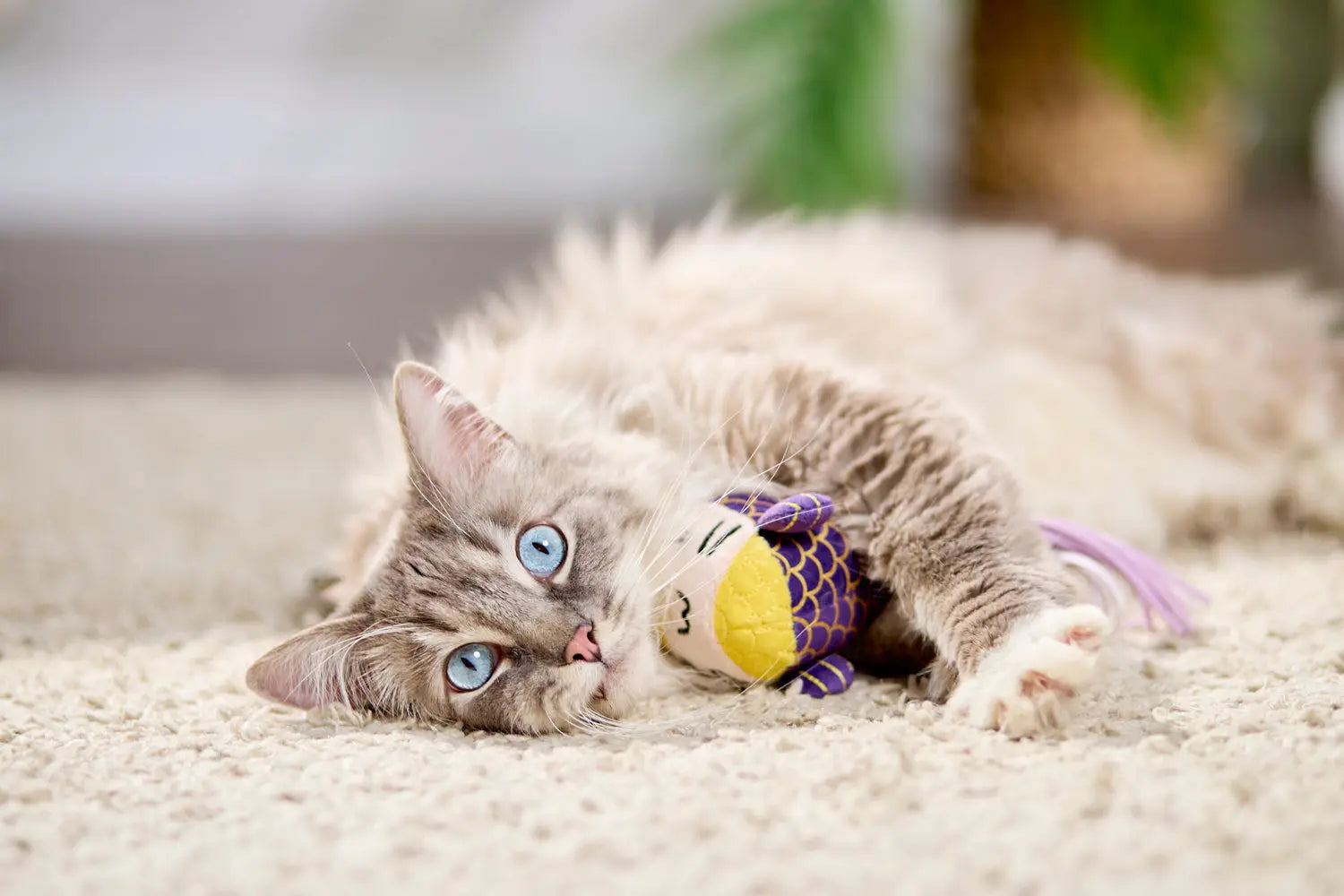
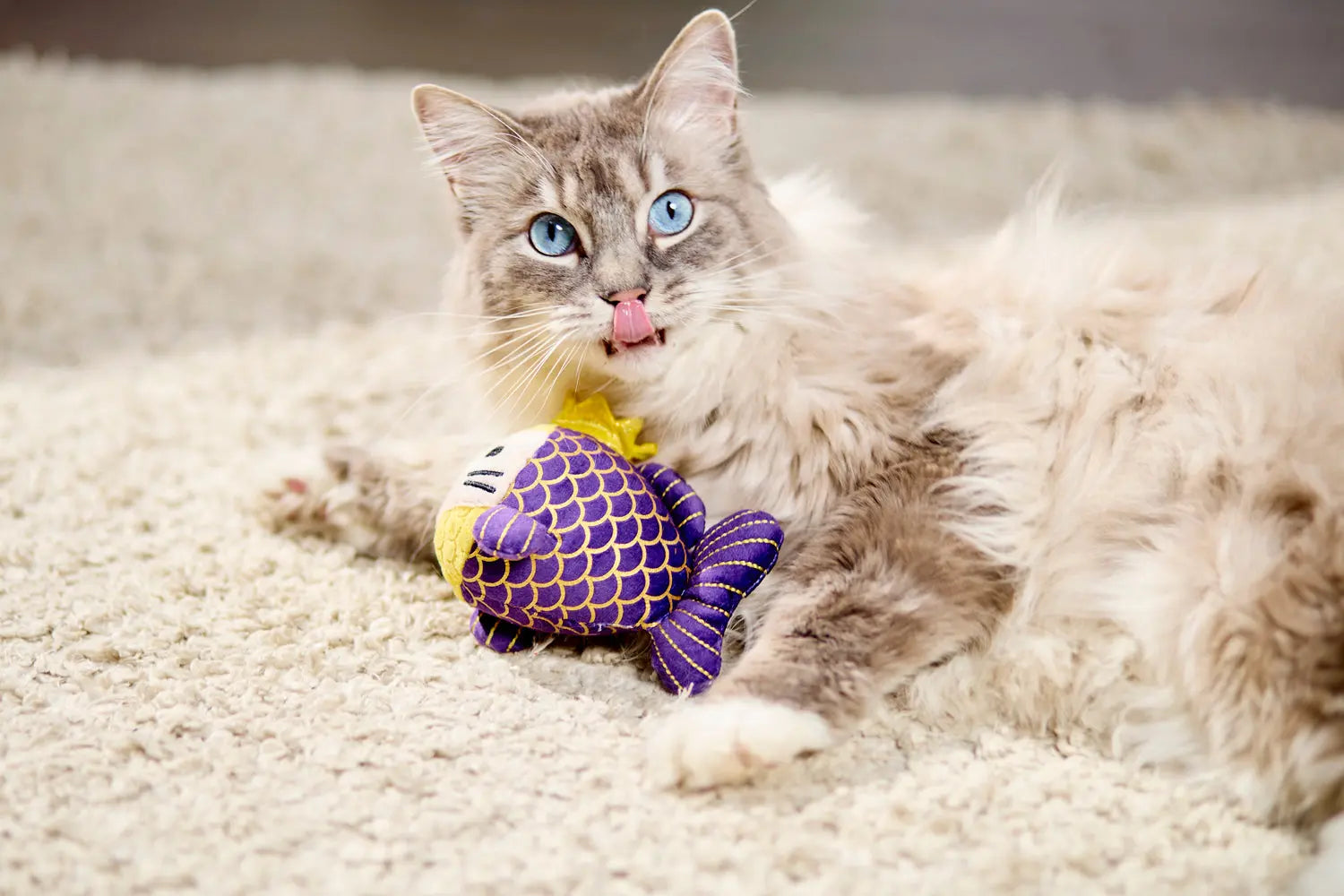
Indoor cats live longer. They also live in an environment that provides none of the hunting, territorial exploration, or sensory variety that outdoor cats experience daily. The gap matters behaviourally. Here's how to close it.
1. The rotation principle for toys
Not buying more cat toys — using the ones you have correctly. Keep three or four accessible. Store the rest completely out of reach in an airtight container. Swap every five to seven days. When a toy returns after two weeks, it's effectively new to a cat who habituates to constant stimuli. Cost: nothing beyond the toys you already own.
2. Fifteen minutes of interactive play before bed
Non-negotiable. Self-play enrichment is supplementary. Interactive play — wand toys, anything that mimics prey movement — provides the hunting sequence that cats require daily. Stalk, chase, pounce, capture. The capture matters: let them win regularly. A hunt that never ends in success is frustrating, not stimulating.
Pre-bedtime timing specifically: consistent play before the evening wind-down redirects nocturnal hunting energy appropriately.
3. Vertical space
Cats are not exclusively ground-level animals. Height is territory. Multiple levels throughout the home — cat trees, wall-mounted shelves, a stable window perch — transform the effective square footage of a flat dramatically. The investment for a basic setup: £40 to £80 and an afternoon.
4. A dedicated scratching station
Placed near sleeping areas and, critically, near the furniture they're currently scratching. The function of scratching is territorial marking and claw maintenance, not furniture destruction. A tall sisal post in the right location redirects this instinct without conflict.
5. Puzzle feeders
Mental stimulation that uses the problem-solving instinct. Start simple; increase complexity gradually. A cat who earns meals through light cognitive engagement is more mentally active than one whose food appears twice daily in a bowl.
6. Window access with something worth watching
A window perch plus a bird feeder positioned outside produces hours of passive stimulation. Background enrichment that works without your involvement.
7. Catnip in rotation
For the 70% of cats who are genetically responsive, therapeutic-grade catnip toys in rotation add meaningful sensory stimulation. The key word is rotation — permanently available catnip loses its effect as the response habituates. [Shop catnip sprays.]
8. Hiding spots
Enclosed beds, caves, a cardboard box with an entry hole cut into one side. Security is a genuine psychological need, not indulgence. A cat who can retreat fully when she wants to is typically calmer when she's out.
9. Sensory variety
Different textures — sisal, fleece, cardboard, carpet. Ambient sound if the flat is particularly quiet (there are dedicated "cat TV" videos with birdsong and movement). Occasional new smells: fresh herbs including cat-safe valerian and silver vine alongside catnip.
10. Consistent routine
Possibly the most underrated enrichment principle: cats are physiologically calibrated to routine. Same feeding times, same play times, same sleep arrangements. Environmental predictability reduces baseline anxiety, which makes all other enrichment more effective. Particularly important for rescue cats in transition.
What improvement looks like
Effective enrichment produces measurable behavioural change within two to four weeks: less nighttime disruption, reduced destructive behaviour, less overgrooming, more alert engagement during the day. If you've implemented multiple items from this list consistently for a month without improvement, a vet visit is warranted. Some symptoms that read as boredom have medical components.
— The Catnip Queen x