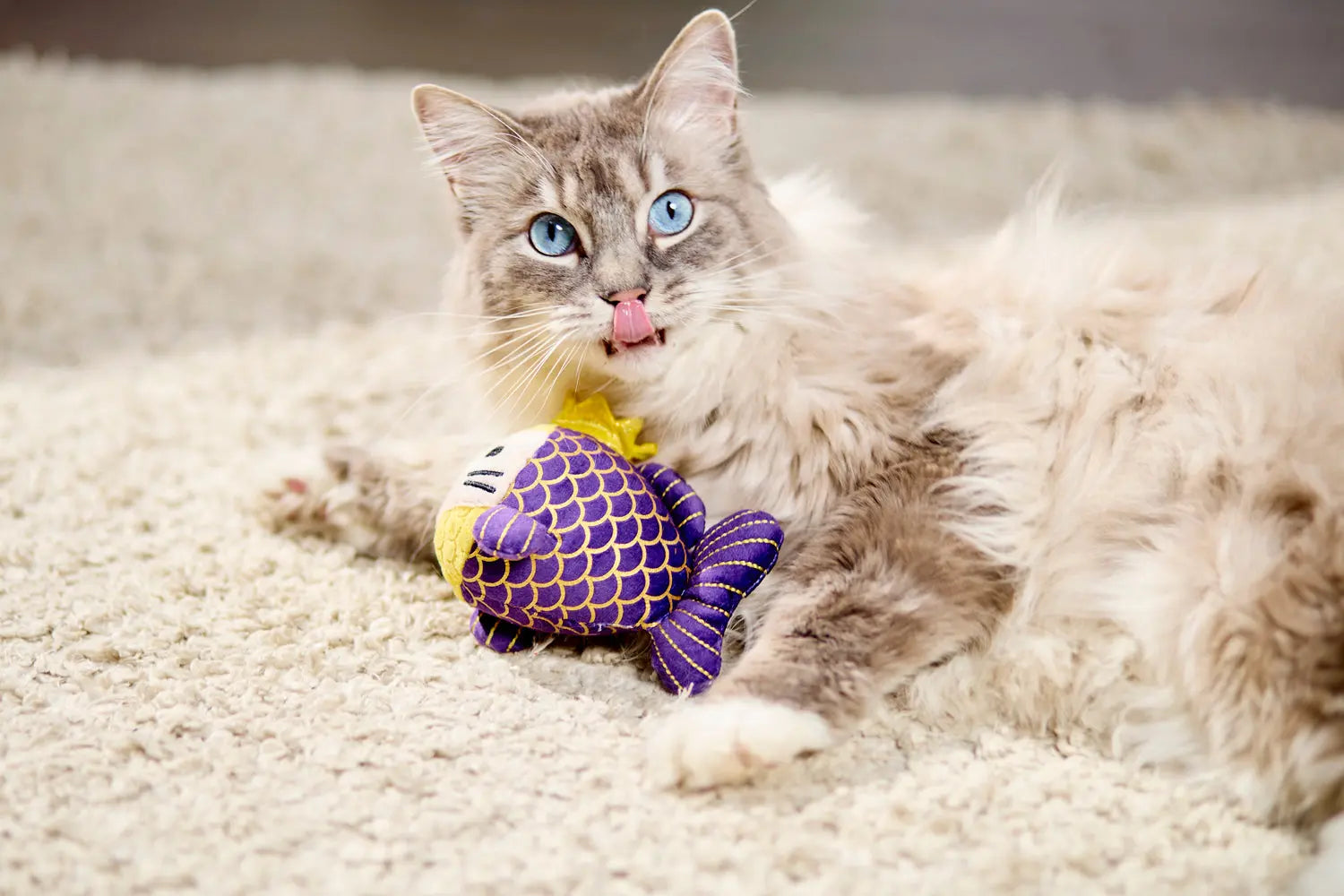
Princess ignores catnip entirely. Always has. She strolls straight past it like a toy that's beneath her. Give her a stick of silvervine or silvervine fruit though, and she's on the floor within ten seconds, doing what the Japanese researchers who study this properly call the matatabi response, and what the rest of us call a cat having the best afternoon of her life!
That's not a fluke. It's chemistry. And if your cat has ever looked at a catnip toy with total indifference, silvervine is very likely the reason you haven't seen them properly lose the plot yet.
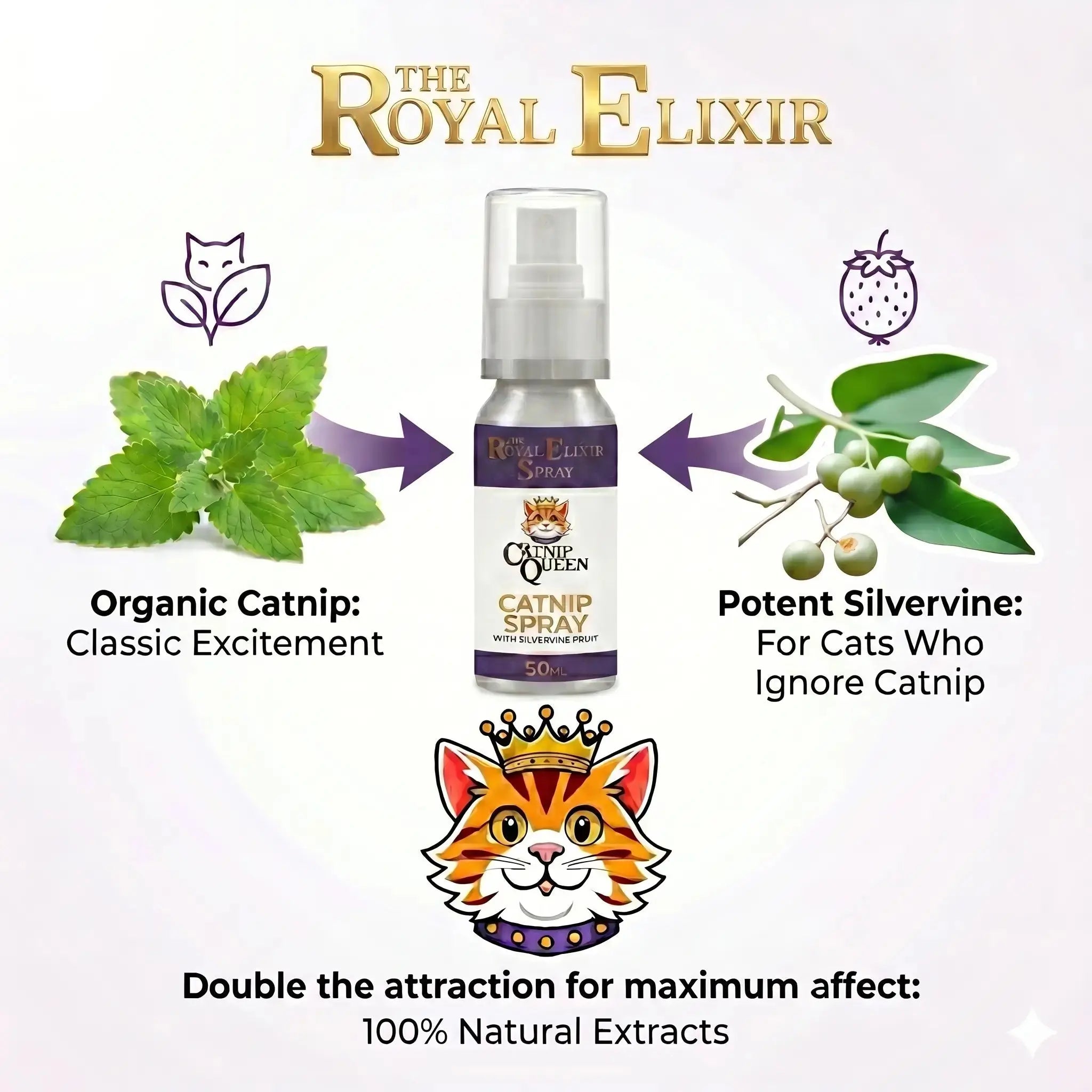
It's why we added it to our silvervine toys with our top of the range organic catnip!
Quick answer: Silvervine (Actinidia polygama) works on roughly 80% of cats, compared to around 60% for catnip. It's non-addictive, backed by long-term safety data, and often effective on cats who show zero interest in catnip. Here's the actual science.
What Silvervine Actually Is
Silvervine is a plant native to Japan and parts of Asia, sold in the UK mostly as dried fruit galls, powder, leaves, or chew sticks. It's been used for centuries, but the research into why it works so well on cats is more recent, and more interesting than most pet product marketing lets on.
Catnip relies on a single active compound: nepetalactone. One trick, done well. Silvervine brings at least two additional iridoid compounds to the party, actinidine and dihydroactinidiolide, giving it a broader chemical signature. Researchers believe this richer profile is why more cats respond to it, and why the response is often more intense.
The Data: 80% vs 60%
A study out of Iwate University, widely reported by outlets including the Japan Times, tested cat responses to both plants directly. Around 80% of cats reacted to silvervine, against roughly 60% for catnip. The more striking finding: even when catnip extract was present in far greater concentration in testing, cats still showed a stronger preference for silvervine.
That's not "cats slightly prefer it." That's cats choosing the less abundant compound because it's simply doing more for them.
Silvervine vs Catnip: At a Glance
|
Catnip (Nepeta cataria) |
Silvervine (Actinidia polygama) |
| Active compound(s) |
Nepetalactone (single compound) |
Actinidine + dihydroactinidiolide (multiple compounds) |
| Approximate response rate |
~60% of cats |
~80% of cats |
| Typical duration of effect |
5–15 minutes |
5–30 minutes |
| Works on catnip non-responders? |
N/A |
Often, yes |
| Addictive or toxic with regular use? |
No |
No |
| Common forms |
Dried leaf, spray, toy filling |
Dried fruit gall, powder, chew stick |
.
Is It Safe?
Yes, and this is where the pet industry usually gets vague. We won't.
Veterinary studies tracking feline exposure to silvervine over periods of up to three years found no evidence of liver or kidney damage. No addiction. No toxic buildup. The behavioural response is intense but short-lived, and cats don't build dependency on it the way the "catnip addiction" myth sometimes implies (that myth is wrong for catnip too, incidentally).
The one thing worth moderating: quantity of ingestion, not exposure. A cat that chews through an entire silvervine stick in one sitting may get mild digestive upset, the same as any concentrated plant material eaten in excess. Sensible portioning solves this.
What to Actually Expect: The Matatabi Response
This is the bit nobody explains properly before your cat does it for the first time in front of guests!
Expect some or all of the following: drooling, face and body rubbing against the source, rolling (repeatedly, dramatically), a burst of hyperactivity, occasional vocalisation, and then a noticeably sedate wind-down. The full sequence typically runs 5 to 30 minutes. It looks alarming the first time. It isn't. It's a euphoric response, not a distressed one, and it resolves on its own.
If your cat seems anxious or is over-vocalising in a way that reads as distress rather than pleasure, stop the session and reassess. That's uncommon, but worth knowing.
How to Use It Without Overdoing It
Silvervine is potent enough that more isn't automatically better. A few sessions a week, rather than constant access, keeps the response sharp rather than blunted through overexposure (the same rotation principle applies here as it does with catnip toys generally: novelty matters more than volume).
Dried fruit galls and powder work well sprinkled on scratching posts or existing toys. Chew sticks suit cats who like something to gnaw. Whatever the form, store it in an airtight container away from light. Potency degrades over time, same as catnip, and a flat-smelling silvervine product isn't doing anything for anyone.
Where This Leaves Catnip
Worth saying plainly: catnip isn't obsolete. It works well for the 60% of cats it works on, it's cheaper to produce at scale, and plenty of cats respond to both plants without needing to choose. The honest recommendation is rarely "switch entirely." It's "if catnip alone isn't landing, silvervine is the next thing to try before assuming your cat simply isn't interested in enrichment."
That's the logic behind blending both into a single formulation rather than picking a side. If one compound doesn't land, the other one usually does.
Sources: ScienceDirect, 2023; PetMD; Japan Times, June 2026; Melbourne Cat Vets; Mainichi, 2023
This blog reflects general informational content and shouldn't be taken as veterinary or medical advice. If your cat shows signs of distress rather than enjoyment during play, or you have concerns about ingestion, speak to your vet.