Indoor cats live two to five years longer than outdoor cats on average. That's the good news. The less comfortable news: those extra years only count for something if they're actually well-lived.
There's a version of indoor cat ownership that looks like success from the outside — healthy, safe, never at risk from traffic or foxes — and slowly turns into something else. Excessive sleeping. Furniture that doesn't survive the year. A 3am chaos routine you've started describing as "just her personality." These aren't personality quirks. They're behavioural indicators. Your cat isn't difficult. She's bored.
Outdoor cats get hunting opportunities, territorial exploration, sensory variety that changes by the hour. Indoor cats get your home, the same walls and same furniture. Understanding that gap is where good enrichment strategy starts.
The Rotation Principle (The Thing Almost Nobody Does)
The single most common mistake: buying a catnip toy, leaving it on the floor permanently, and concluding that your cat "doesn't really like toys" when she stops engaging after three days. Cats habituate to constant stimuli. That catnip mouse isn't boring because it's a bad toy. It's boring because it's always there.
What actually works is rotation. Keep three or four toys accessible at any time. Store the rest completely out of reach, sealed container, airtight bag, out of the room entirely. Swap every five to seven days. When the "new" toy comes back out, it smells fresh, unfamiliar, interesting again. The toy hasn't changed. The context has.
The cost logic is straightforward: £30 across six toys used in rotation consistently outperforms £100 spent on toys that live on the floor until they're invisible.
Quality plus strategy beats quantity, plus inertia!
15 Minutes of Interactive Play. Non-Negotiable.
Self-play toys, catnip mice, crinkle balls, anything your cat can bat around alone — are supplementary enrichment. They're not a substitute for interactive play, and they won't resolve the behavioural issues that come from genuine under-stimulation.
What indoor cats need daily is movement that mimics prey: erratic, stop-start, disappearing, reappearing. The opportunity to stalk, pounce, and complete the hunt. And crucially, some wins. Letting your cat catch the toy matters. A hunt that never ends in capture is frustrating, not stimulating.
Wand toys with catnip-infused attachments work particularly well here because you control the movement, the catnip adds scent appeal, and the cat gets to engage their full hunting instinct rather than just batting at something static. Fifteen minutes. Before the evening wind-down. Winston — high-energy rescue, formerly the architect of four nightly disturbances — dropped to one or two after three weeks of consistent pre-bedtime sessions. That's not a coincidence.
When you're tired and the last thing you want to do is wave a wand toy around for a quarter of an hour: do it anyway. Preventing behavioural problems is considerably easier than resolving them.
Matching the Toy to the Cat
Not every indoor cat needs the same enrichment. Here's what we've seen work across different personalities and situations.
High-energy cats, i.e. the 3am brigade: Kicker toys. Large, elongated (25 to 30 centimetres — size matters, too small and the mechanics don't work), filled with quality catnip. These allow full-body engagement: front legs gripping, back legs rabbit-kicking, the whole athletic sequence. They're one of the few toys that can genuinely tire an energetic cat out. Use them as part of the pre-bedtime routine and give it two weeks before you evaluate.
Problem-solving cats: Puzzle toys with catnip. The goal is mental stimulation that actually challenges them — not so easy it's solved once and ignored, not so difficult it produces frustration rather than engagement. Start simple, increase complexity gradually. Success matters more than difficulty level.
Window-watchers: Suction-cup catnip toys that attach to glass let cats combine their passive bird-watching hobby with something more active. A note on quality: test the suction strength before committing. A toy that falls mid-session creates negative associations. Buy the one with good cups or skip the category.
Overweight cats: Lightweight toys that encourage batting and chasing without intimidation. The goal is incremental movement, not intense exercise, and small wins that build confidence. A note of honesty: exercise alone won't address cat obesity. Portion control does most of the work. But movement helps, and low-barrier toys add it throughout the day.
Catnip Quality Matters More for Indoor Cats
Outdoor cats have environmental variety. For indoor cats, enrichment has to work harder — which means the quality of what you're providing directly affects whether it engages them at all.
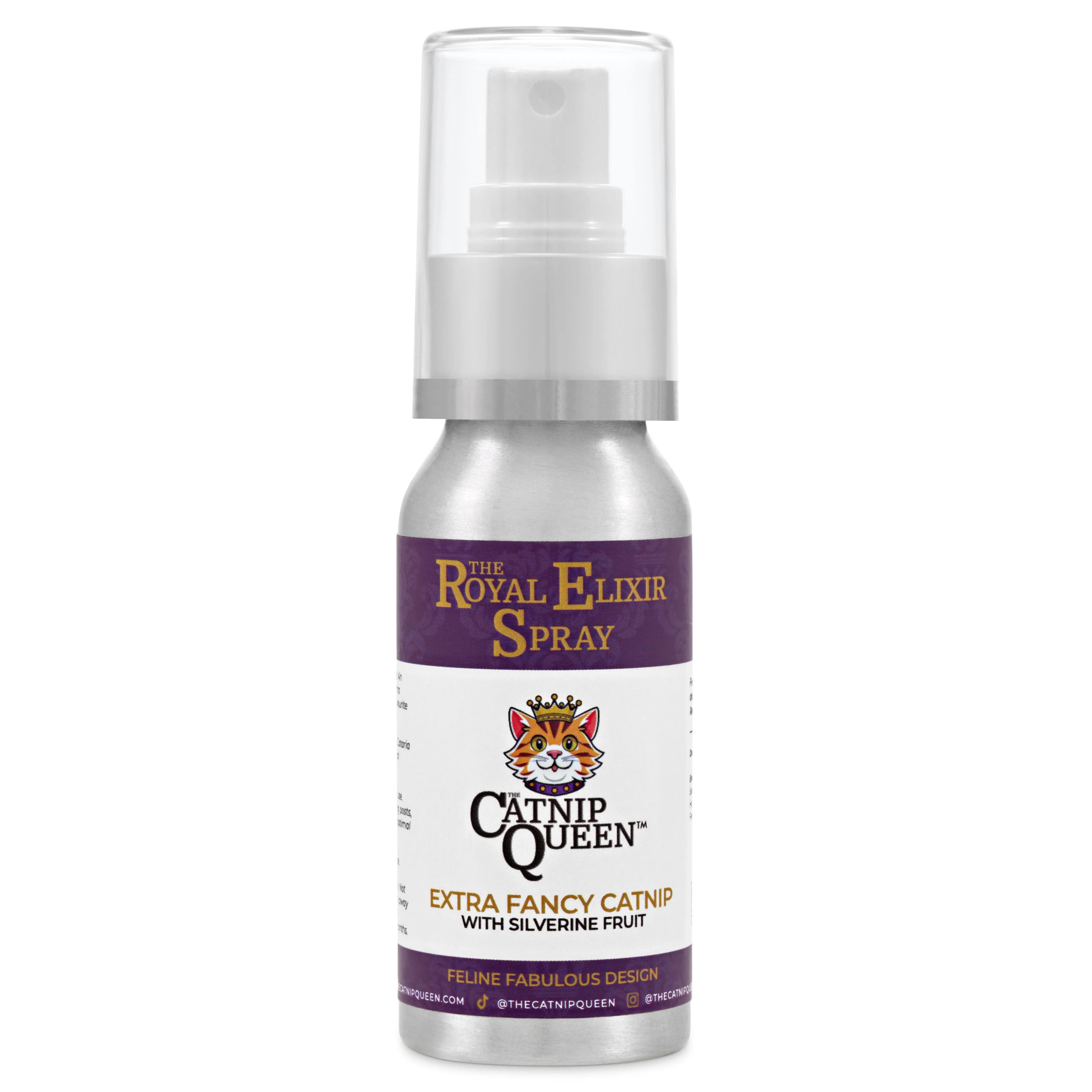
Therapeutic-grade organic catnip from a traceable source behaves differently from "catnip-scented" toys using synthetic fragrance, or budget products with minimal actual catnip content. The tell is the smell when you first open it: genuinely potent catnip has an immediate, distinctive scent. Flat-smelling catnip has usually degraded, or was never concentrated enough to matter.
Potency degrades over six to twelve months regardless of quality, so storage matters too. Airtight containers, away from light, somewhere your cat can't conduct their own investigation.
The honest price reality: cheap catnip toys at £3 to £5 tend to be ignored after one session. Mid-range products with quality catnip at £8 to £12 are effective and reusable. The £4 to £7 difference is irrelevant if the cheaper option ends up in the corner untouched within a week.
The Complete Indoor Environment
Catnip toys for indoor cats are one component of enrichment, not the whole picture. The setup that actually works for indoor cats includes:
Vertical territory: cat trees, wall-mounted shelves, window perches. Cats don't just need floor space; they need height. Multiple levels throughout the home. This is non-negotiable for territorial wellbeing.
Scratching options in variety: horizontal and vertical, different textures (sisal, cardboard, carpet), near sleeping areas and entry points. Placed thoughtfully, these redirect destructive scratching before it starts.
Hiding spots: enclosed beds, caves, cardboard boxes. Security is a genuine need, not indulgence. A cat that can fully retreat when they want to is a calmer cat the rest of the time.
Sensory variety: window access for visual stimulation, different textures for tactile exploration, ambient noise or "cat TV" if your flat is particularly quiet.
The investment to set all of this up properly: £85 to £180 depending on what you already have. For context, a single behavioural vet consultation runs £150 to £300.
Furniture replacement after sustained destructive scratching: £200 to £1,000 and upwards. Deposit deductions for inappropriate elimination: £150 to £500. The maths on prevention is not subtle.
On Sustainability
This is worth saying plainly because the pet industry has a significant waste problem. Single-use toys, plastic-heavy construction, excessive packaging — all of it ends up somewhere. The more sustainable approach is fewer, higher-quality toys that last months, refillable options where the catnip is replaceable rather than the whole toy, natural materials throughout, and honest acknowledgement that a free cardboard box often outperforms a £20 product.
We prioritise durability and refillability in what we make. Not because it's a marketing angle — because it's the only approach that makes sense if you actually think it through.
What Improvement Looks Like
Effective enrichment produces measurable behavioural change within two to four weeks. Less nighttime disruption. Less destructive behaviour. Reduced overgrooming. More alert and engaged during the day. Relaxed posture, more purring — the indicators that a cat is actually content rather than just present.
If you're rotating toys, doing daily interactive sessions, and not seeing change after a month: increase the complexity of your puzzle toys, add more vertical space, and consider a vet visit. Some symptoms that look like boredom have medical components. Worth ruling out.
Questions about specific setups, toy recommendations for your cat's temperament, or troubleshooting a particular behaviour? DM us.
— The Catnip Queen x
P.S. That cardboard box your cat is obsessed with? Legitimate enrichment. Free enrichment. Don't overthink it.